 J. & Company, “Instructeur Magnétique Américain. Grammaire” (c. 1870–90), a French educational grammar game (all photos by the author for Hyperallergic)
Books exist as receptacles of information, but for many years people have adopted
their format and appearance to create other objects or containers for an array of items.
Such objects are referred to as “book-looks” — or “blooks,” a term coined by Mindell Dubansky,
a preservation librarian at the Metropolitan Museum of Art’s Thomas J. Watson Library
who has over the years amassed hundreds of examples. A sample of her growing collection is
now on view at the Grolier Club in the exhibition Blooks: The Art of Books that Aren’t,
filling the shelves of its second floor gallery with over 100 objects that resemble books,
illustrating our fascination with their design and architecture rather than simply the contents
of their pages. Most of the ones that can open are arranged in ways that show both their
outsides and interiors, making for a thoughtful and extensive display.
their format and appearance to create other objects or containers for an array of items.
Such objects are referred to as “book-looks” — or “blooks,” a term coined by Mindell Dubansky,
a preservation librarian at the Metropolitan Museum of Art’s Thomas J. Watson Library
who has over the years amassed hundreds of examples. A sample of her growing collection is
now on view at the Grolier Club in the exhibition Blooks: The Art of Books that Aren’t,
filling the shelves of its second floor gallery with over 100 objects that resemble books,
illustrating our fascination with their design and architecture rather than simply the contents
of their pages. Most of the ones that can open are arranged in ways that show both their
outsides and interiors, making for a thoughtful and extensive display.
The variety of blooks — both handmade and commercially manufactured, and constructed
of all types of material — is remarkable and overwhelming, with some items dating as far
back as the late 18th century. As you may expect, many of these creations take advantage
of the format of a book to hide items of personal value in hollowed-out areas, perfect for
camouflaging on a shelf. Children’s coin banks, for instance, hide behind misleading covers
that market the vaults as encyclopedias. On view, too, are slender cases meant to hold
recipes in the shape of a seven-volume recipe book — in which one previous owner once
hid a personal letter regarding “her unsuitable conduct and questionable behavior.”
of all types of material — is remarkable and overwhelming, with some items dating as far
back as the late 18th century. As you may expect, many of these creations take advantage
of the format of a book to hide items of personal value in hollowed-out areas, perfect for
camouflaging on a shelf. Children’s coin banks, for instance, hide behind misleading covers
that market the vaults as encyclopedias. On view, too, are slender cases meant to hold
recipes in the shape of a seven-volume recipe book — in which one previous owner once
hid a personal letter regarding “her unsuitable conduct and questionable behavior.”
This potential to conceal also led to a number of blooks for impish entertainment: beyond
classic board games (and even educational ones), some blooks were mass-produced as gags.
One 19th-century trick book stashes a snake that emerges open-mouthed from its wooden
lair if you tug a string. The exhibition also features an entire case of “punchline” books
that deliver jokes — at times silly, at times shocking — to viewers upon the opening of
their “pages.” One absurd title, for instance, suggests it will advise on how to save the hair
of those in fear of balding; upon opening it, however, you instead see a compartment for
literally preserving locks.
classic board games (and even educational ones), some blooks were mass-produced as gags.
One 19th-century trick book stashes a snake that emerges open-mouthed from its wooden
lair if you tug a string. The exhibition also features an entire case of “punchline” books
that deliver jokes — at times silly, at times shocking — to viewers upon the opening of
their “pages.” One absurd title, for instance, suggests it will advise on how to save the hair
of those in fear of balding; upon opening it, however, you instead see a compartment for
literally preserving locks.
Other containers adopted the design of a book simply for aesthetic reasons, serving as
practical objects while nodding to what was perhaps their owners’ passion for reading —
or at least a desire to present the illusion of intellect. Someone once organized his or her
office supplies in a large tome, and one woman kept her 14-piece vanity set in a blook
with an elaborate 1920s-style cloth binding. Then there’s the very meta “book repair kit,”
which came complete with an eraser, mending tape, sponge, glue, and its very own book:
an instruction manual to properly proceed with mendings. On the flip side, other blooks,
from ceramic ashtrays to lighters with decorated dust jackets, focused only on the
superficial look of a book and do not open at all.
practical objects while nodding to what was perhaps their owners’ passion for reading —
or at least a desire to present the illusion of intellect. Someone once organized his or her
office supplies in a large tome, and one woman kept her 14-piece vanity set in a blook
with an elaborate 1920s-style cloth binding. Then there’s the very meta “book repair kit,”
which came complete with an eraser, mending tape, sponge, glue, and its very own book:
an instruction manual to properly proceed with mendings. On the flip side, other blooks,
from ceramic ashtrays to lighters with decorated dust jackets, focused only on the
superficial look of a book and do not open at all.
Many of these objects are admittedly slightly kitschy, but the unexpected shedding of pages
— what makes books symbols of knowledge — to simply having the image of a book
around you is what makes blooks particularly endearing. Still, some blooks offer more
than just their unique physical presence and do hold sentimental value for their owners.
One cabinet in the exhibition features a number of wooden love tokens and small,
palm-sized memorials carved with tender texts to loved ones, all created in the shape
of books. Although unassuming and easy to glance over compared to larger, impressive
volumes, they have the same power of the tomes they emulate, serving to transport the
mind and heart in deeply meaningful ways.
— what makes books symbols of knowledge — to simply having the image of a book
around you is what makes blooks particularly endearing. Still, some blooks offer more
than just their unique physical presence and do hold sentimental value for their owners.
One cabinet in the exhibition features a number of wooden love tokens and small,
palm-sized memorials carved with tender texts to loved ones, all created in the shape
of books. Although unassuming and easy to glance over compared to larger, impressive
volumes, they have the same power of the tomes they emulate, serving to transport the
mind and heart in deeply meaningful ways.

Trick snake book (mid-to-late-19th c.) (click to enlarge)
A stamp holder
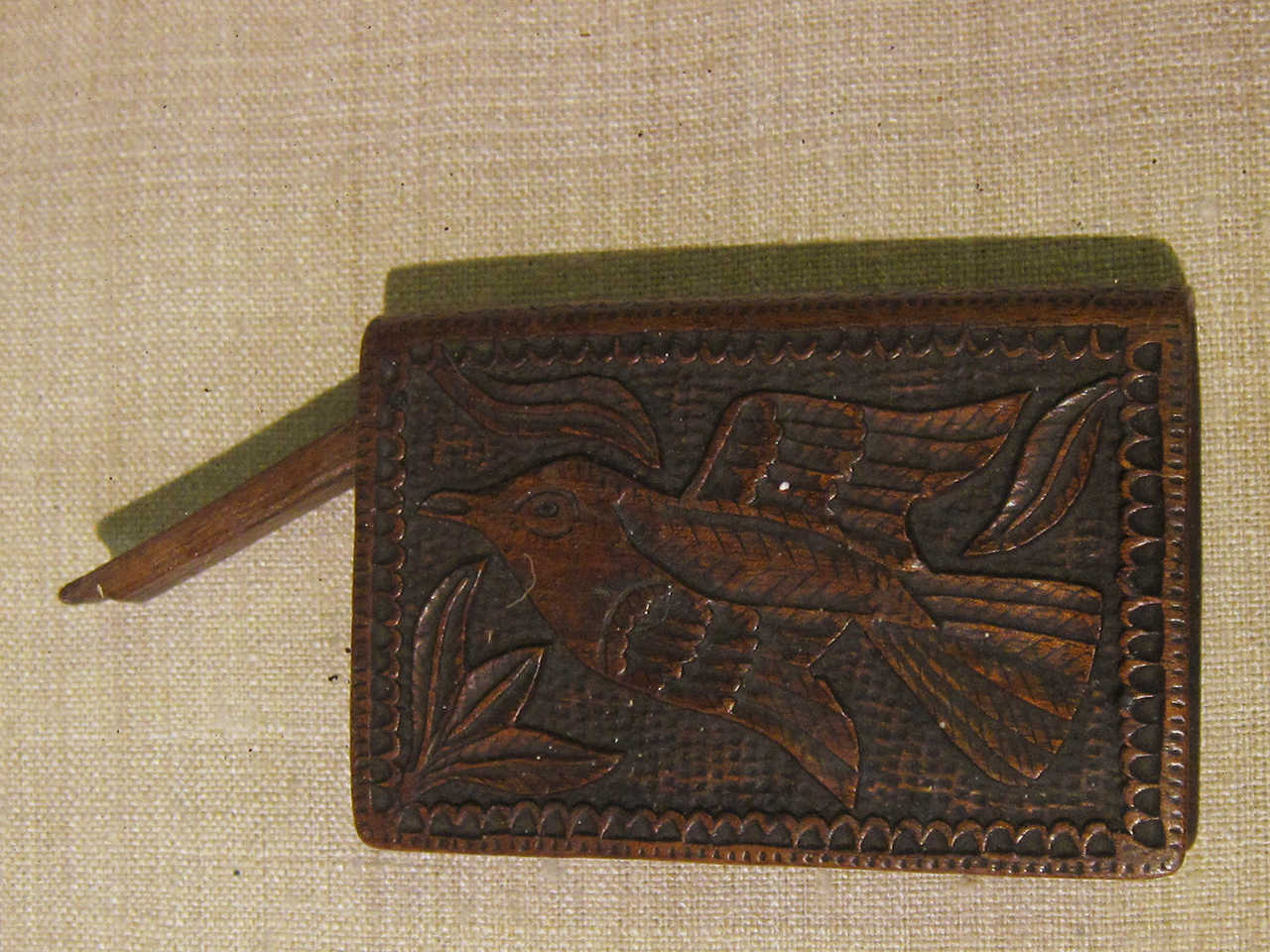
A hand-carved wooden cigarette case (1914-1917)
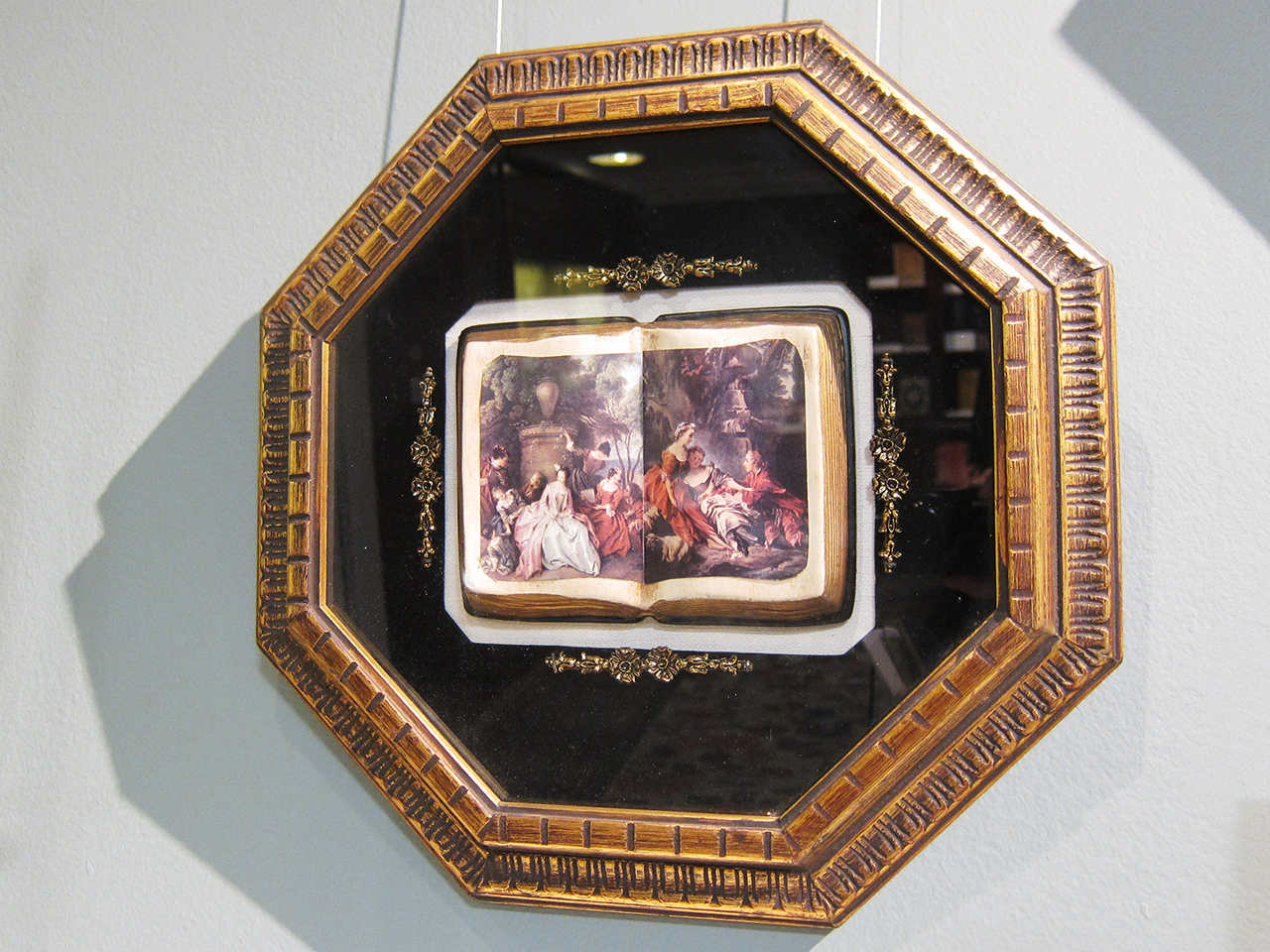
A framed faux box with three-dimensional open books showing decoupage images of famous European paintings (mid-20th c.)
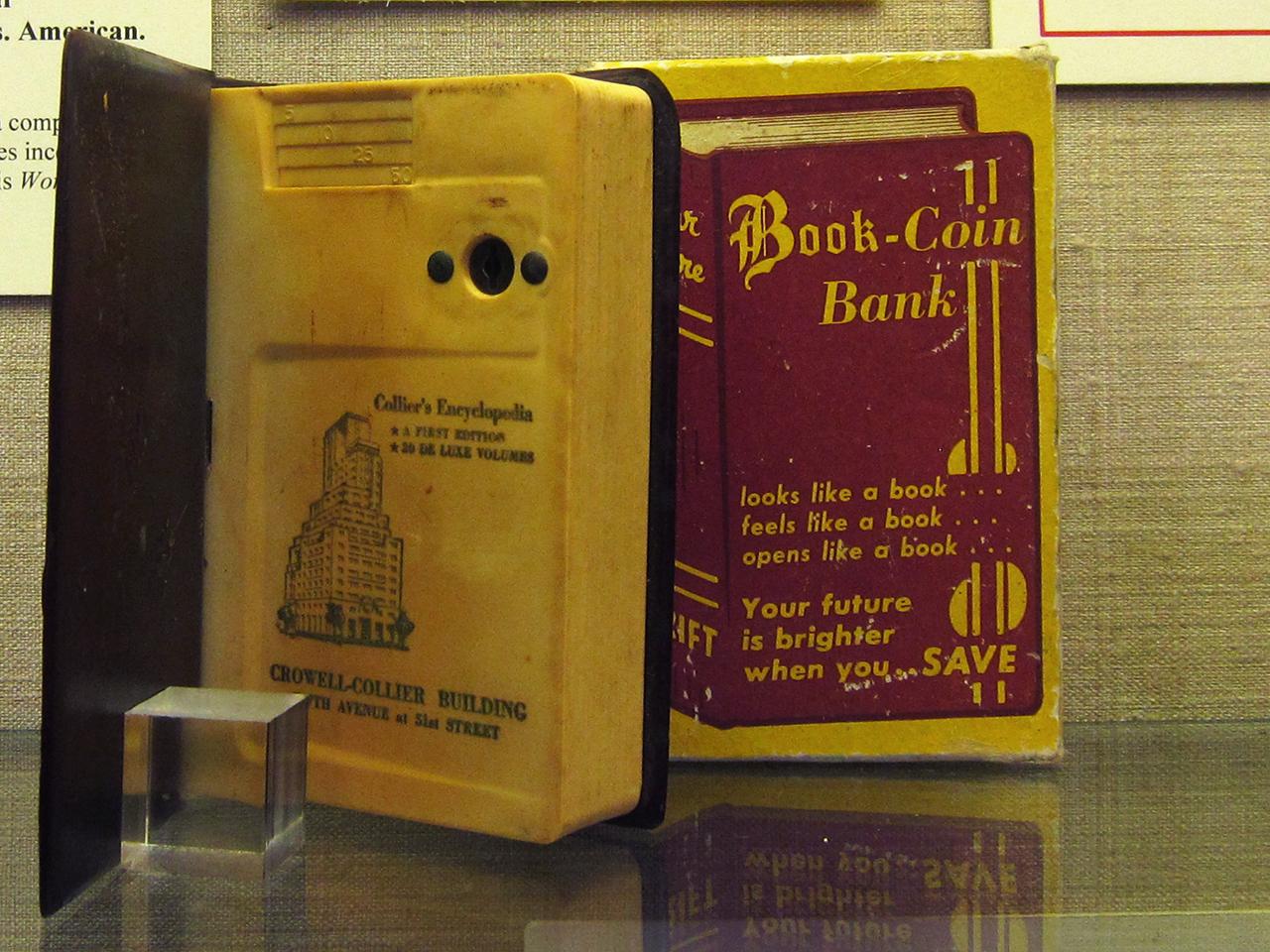
Crowell, Collier and McMillan, “Your Future” (1950s-60s), a child’s book-coin bank
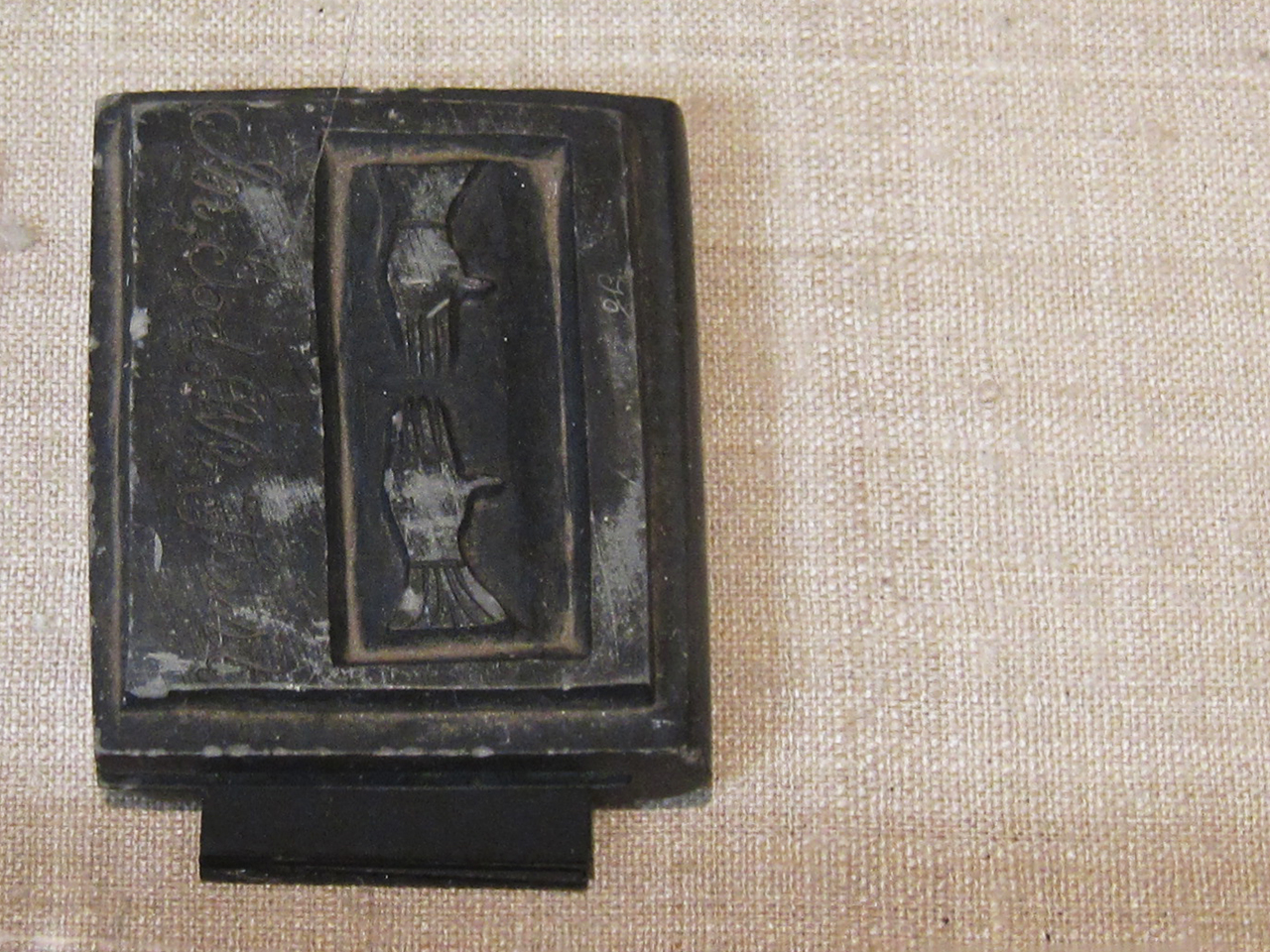
Hand-carved slate memorial book, inscribed with “In Memory” on the spine and “In, God. We, Trust” on the cover
![Philip V. Spinner & Company, "Smoke and Ashes [by] Flame" (1927), a smoking set](http://hyperallergic.com/wp-content/uploads/2016/03/blooks11.jpg)
Philip V. Spinner & Company, “Smoke and Ashes [by] Flame” (1927), a smoking set
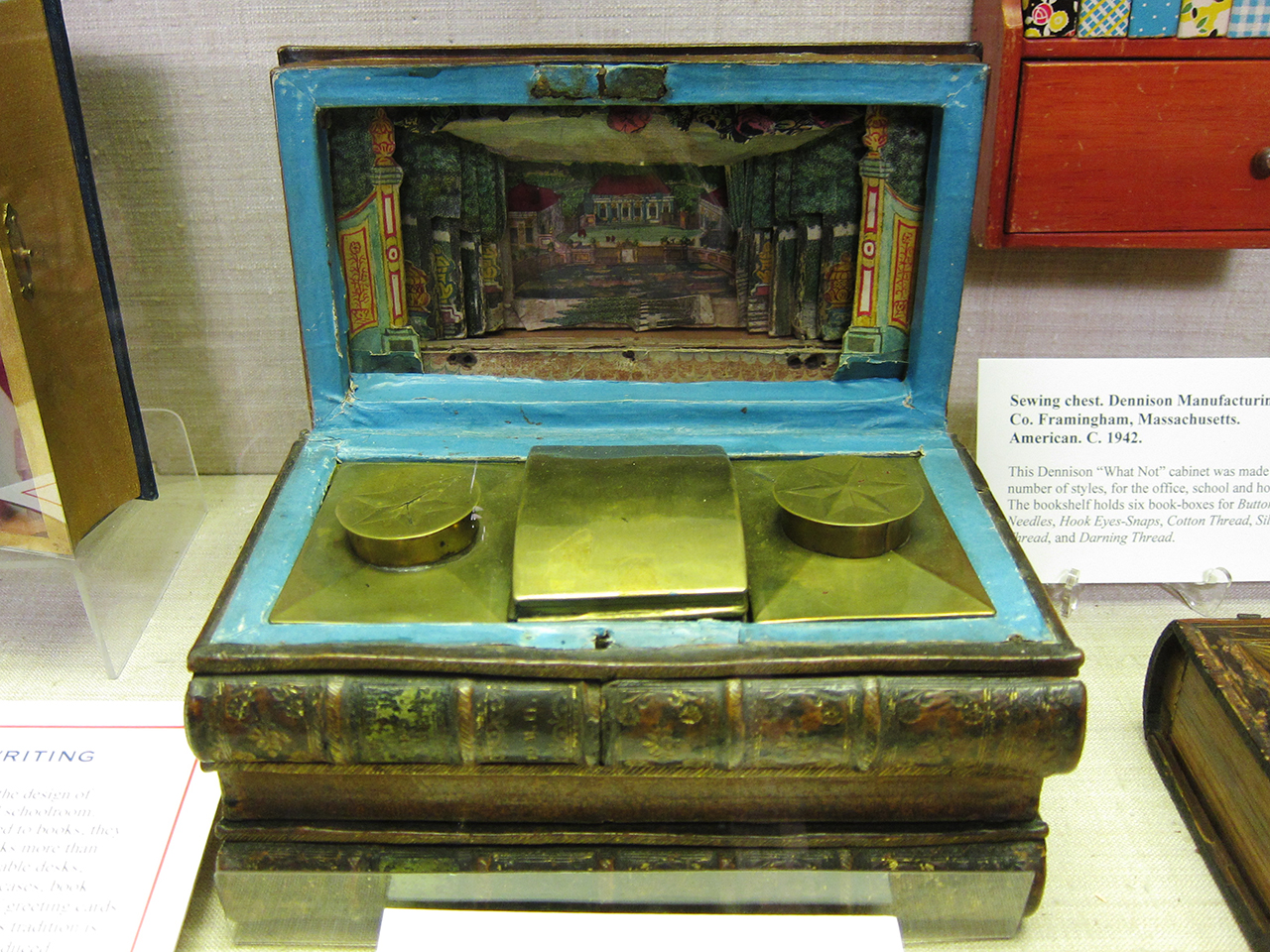
Writing or tea box with a paper theater (late 18th to mid-19th c.)
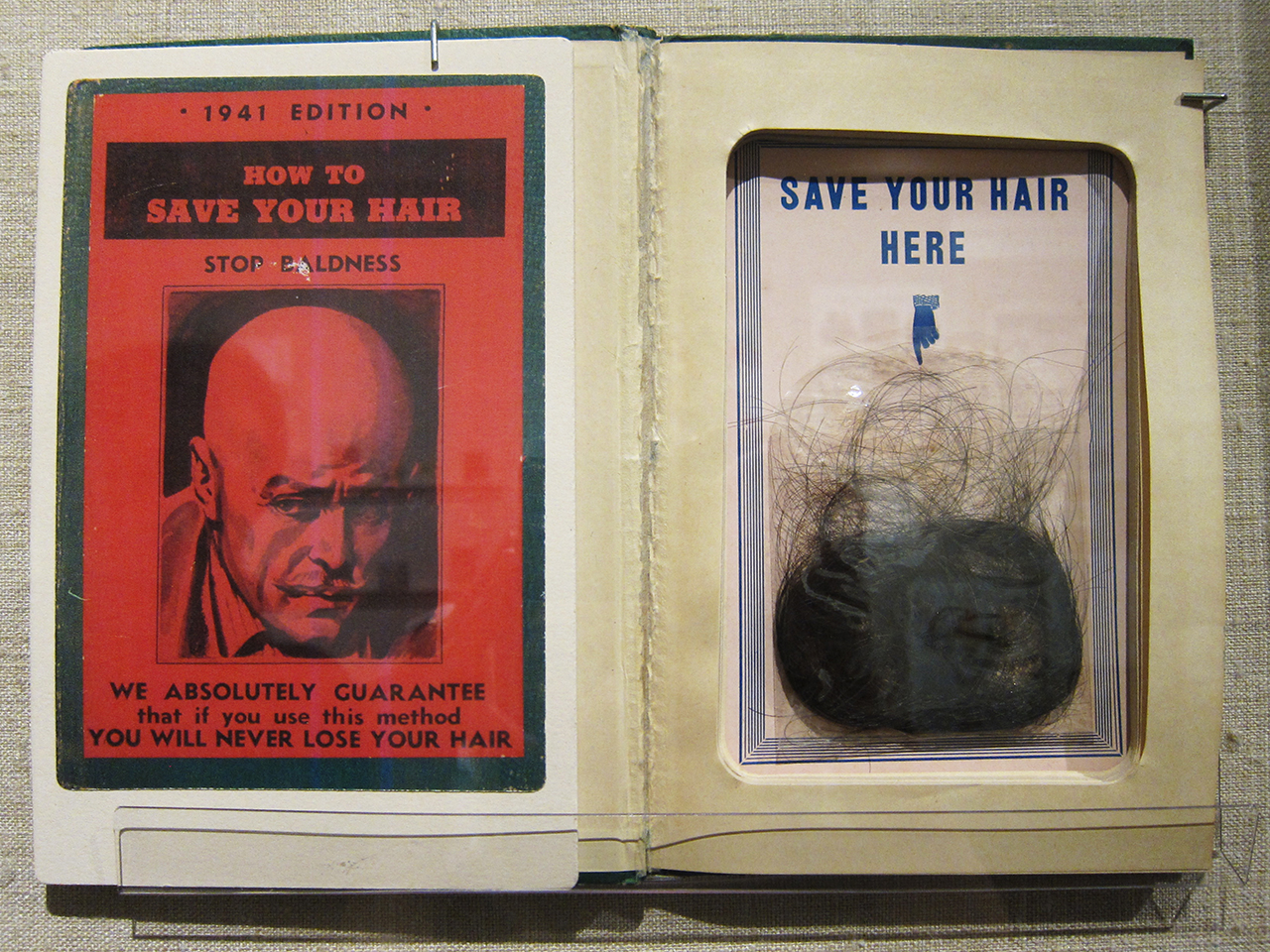
“How to Save Your Hair” (1941 edition of mid-19th c. publication)

Reversible Collar Company, “Album Collar”, a collar box for a new and improved cotton and paper collar (1870s)
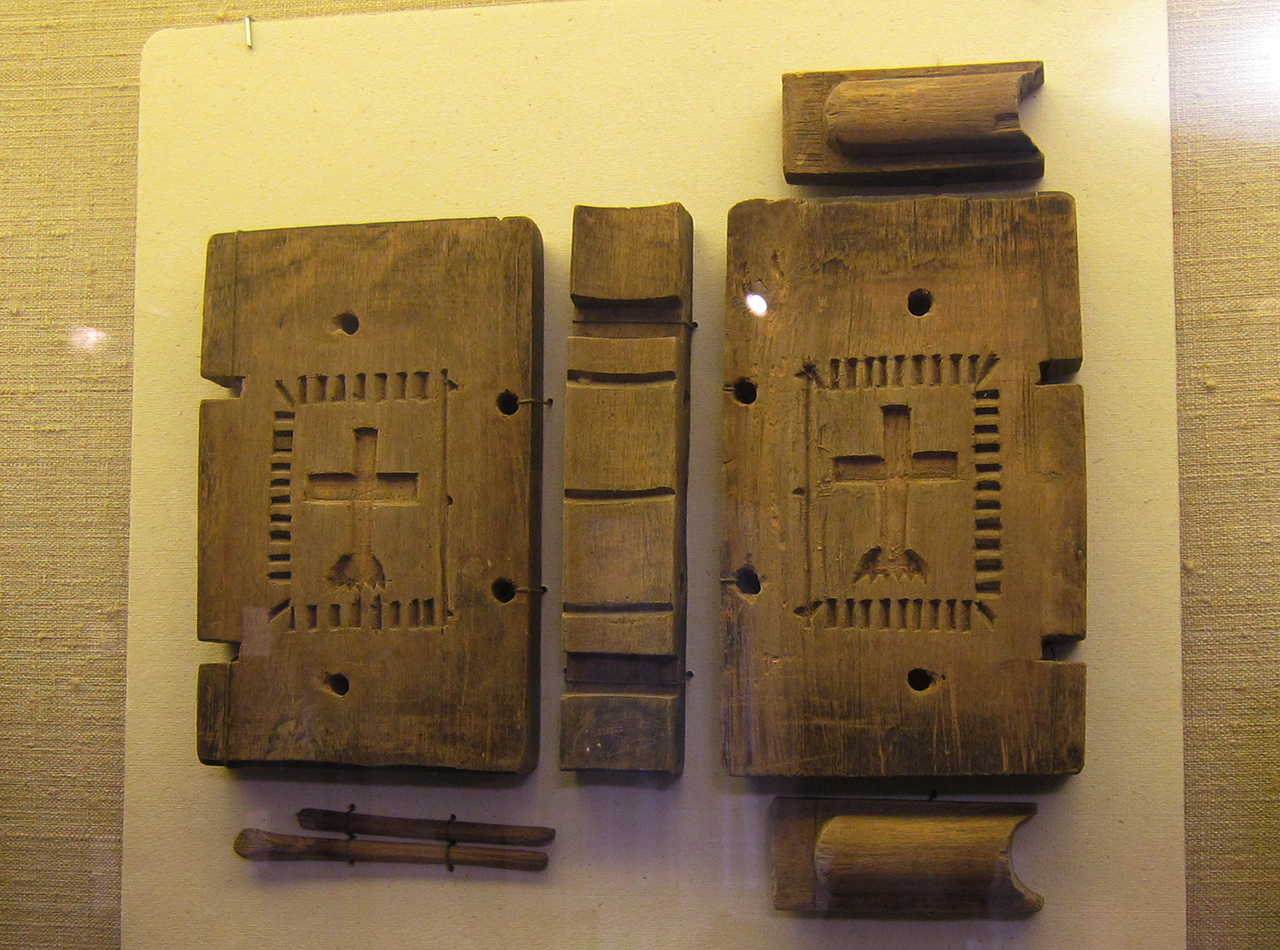
A carved maple sugar mold in the shape of a bible, likely meant for a communal holiday meal or funeral (c. 1820s)
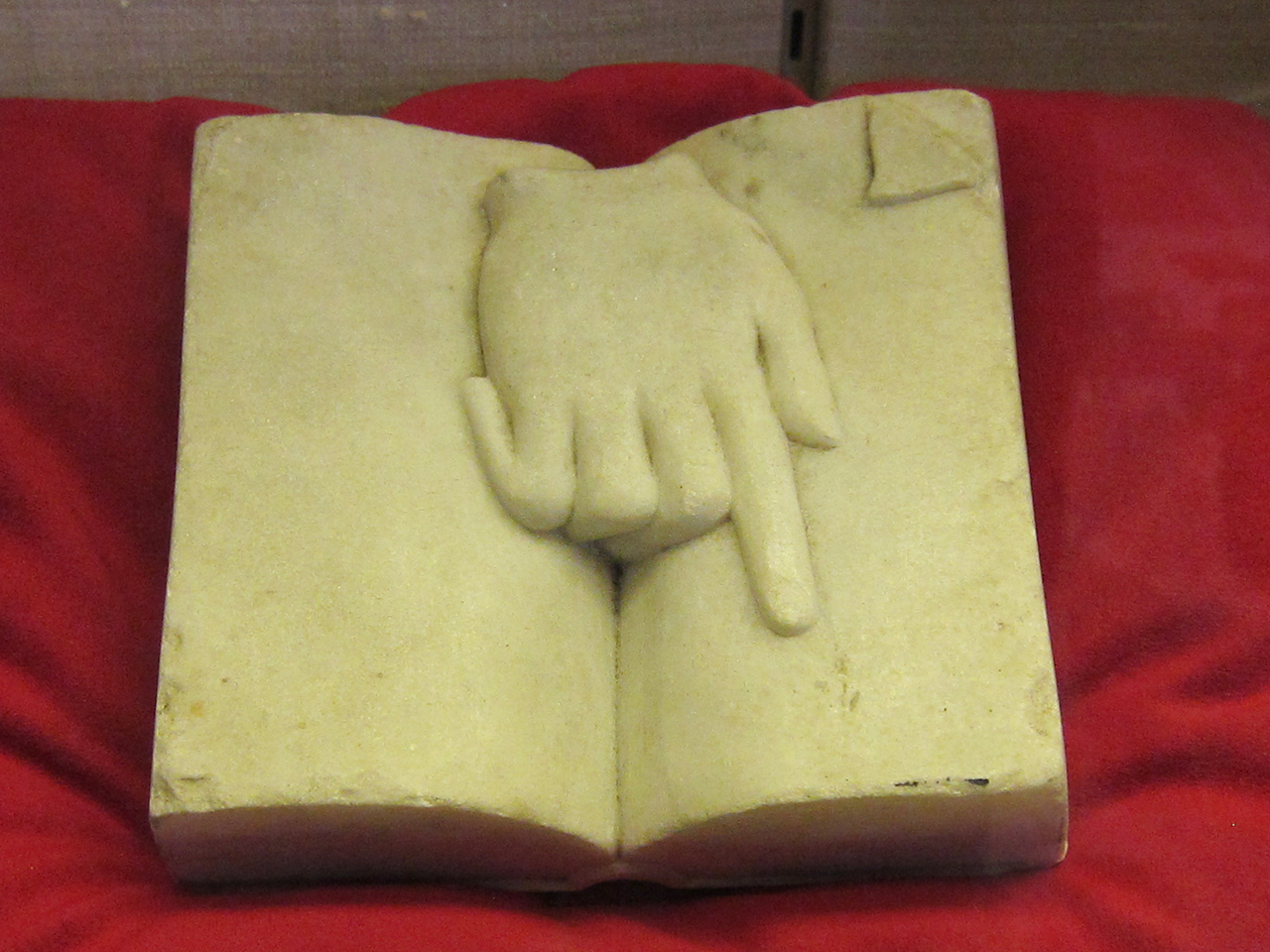
Marble memorial box (19th c.)
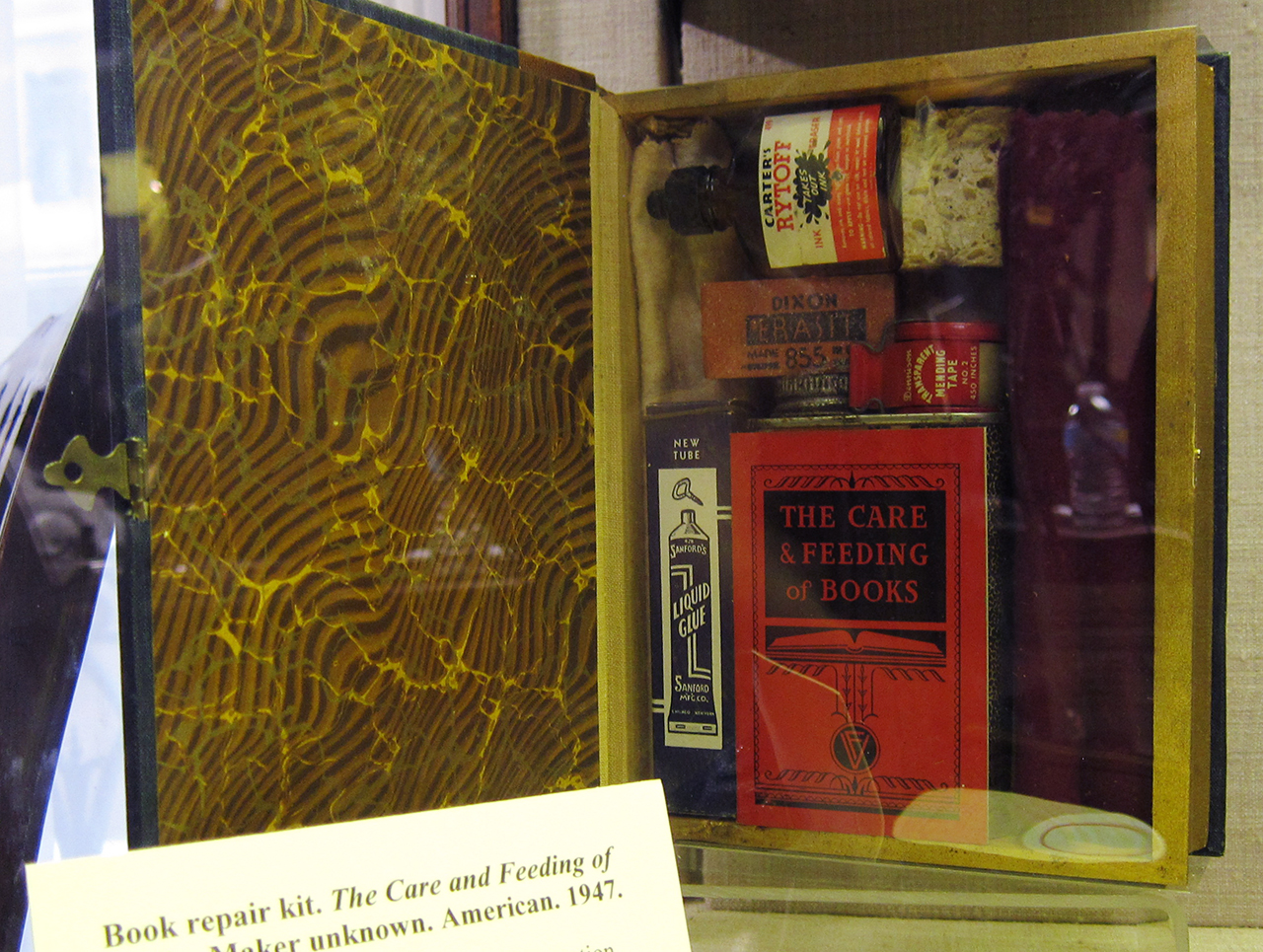
“The Care and Feeding of Books” (1947), a book repair kit
Blooks: The Art of Books That Aren’t continues at the Grolier Club (47 East 60th Street, Manhattan)
through March 12.
You can purchase a catalog via this blog,
or contact me at mindelldubansky@gmail.com.
THANK you Hyperalleric and Claire Voon for this
wonderful review. Here's a link to the original:
http://hyperallergic.com/279766/the-aesthetic-allure-of-books-without-pages/


