Showing posts with label folk art. Show all posts

Wednesday, July 13, 2016

The Curious Genre of Maple Sugar Bible Molds


Before the availability of refrigeration which made maple syrup a viable commodity, maple products were produced in solid forms such as maple sugar. Maple sugar was often processed in decorative wooden molds as sale or gift items. Sugar molds were made during the 19th century throughout New England and Canada. I have found a curious group of bible molds which produced small sugar bibles that would fit in your hand. I have seen these in three different designs and assembly styles. Two are in my collection and one is at the Royal Ontario Museum. I don't really have an understanding yet of the context of the maple sugar bibles, but they could have been served at religious communal meals and holidays, or perhaps they were gifts or rewards for children.


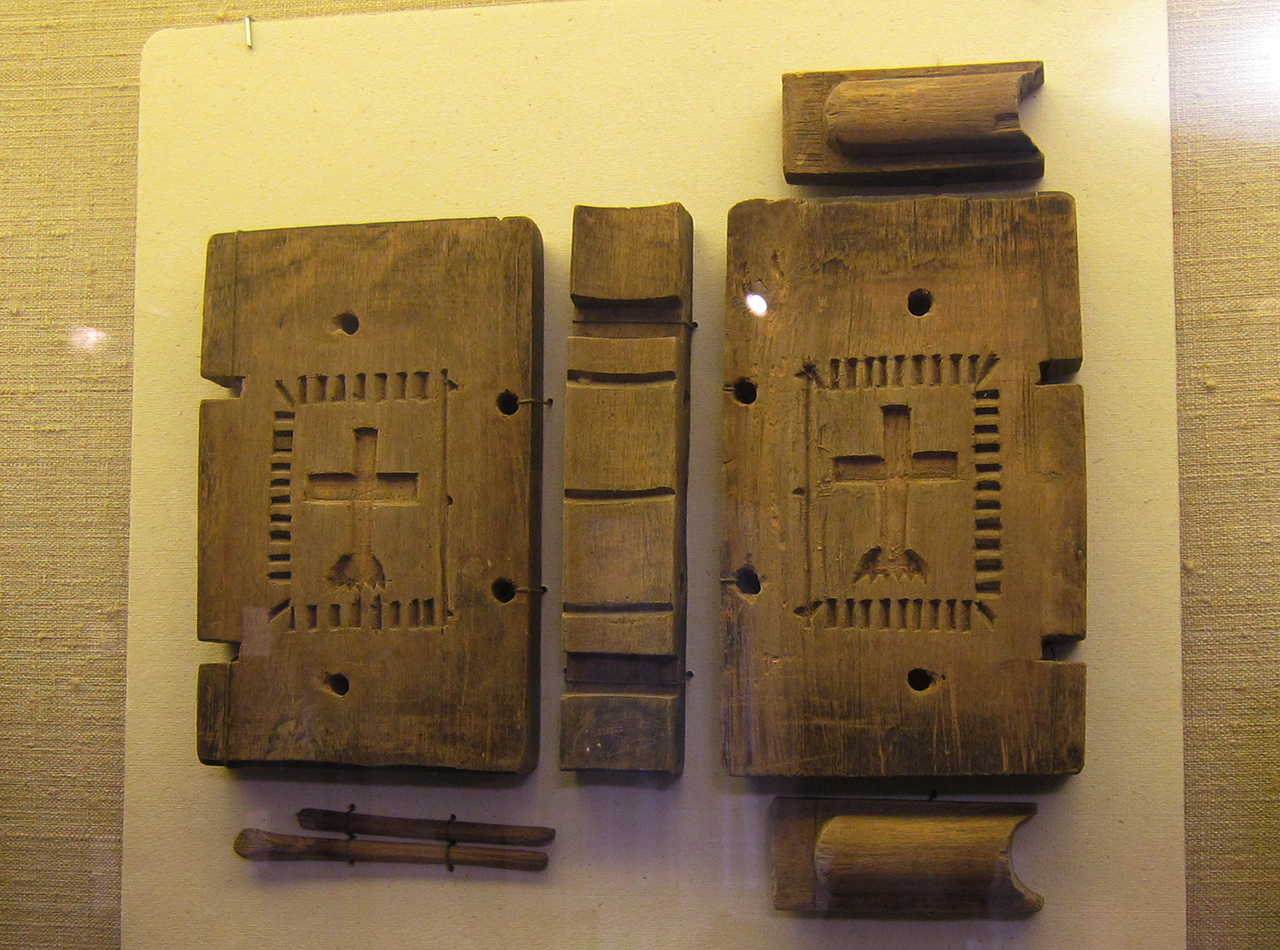
Mold 1: This mold was purchased from a dealer in Maine. It probably dates from the late 19th century. It is missing it's foredge piece. In the shipping box there was an additional spine piece, indicating that there were at least two book molds. This is a six-piece mold held together with four wood pegs. Only two are shown. Its bookish features include a curved spine with three raised bands, squares, and a cross design typical of a bookbinding. The mold is fully described in my book Blooks: The Art of Books That Aren't. To understand more about the history and production of maple sugar, I refer you to the essay Maple History, from the website of the Massachusetts Maple Producers Association. Here is a segment:
From the journals of early New England explorers we have learned that there were three types of maple sugar made by the Northeastern American Indians: "Grain Sugar" a coarse granulated sugar similar to that we know as "brown sugar"; "Cake Sugar," sugar poured into wooden molds to become hard cakes or blocks; and "Wax Sugar," which was made by boiling syrup extra thick and pouring it over snow. This wax sugar is what we know today as "sugar on snow."
In the early days maple sap was boiled down and made into maple sugar, instead of the more common maple syrup that we see today. There was no easy way to store syrup as a liquid, but hardened, dry maple sugar was easily stored for use later in the year. The Native Americans of New England used their maple sugar as gifts, for trading, to mix with grains and berries and bear fat. During the heat of summer a special treat was a drink made of maple sugar dissolved in water. The early European settlers who came to New England made maple sugar in the way which they learned from the Native Indian population. The settlers set up sugar camps in the woods where the maple trees were most plentiful, and the trees were slashed with an ax to allow the sap to drip out and be collected. As early as 1790 it was suggested that. slashing the trees was not good for their health, and that a better way was to drill a half inch hole in the tree and insert a "spill" or spile to allow the sap to run out. The early spiles were made of a softwood twig such as sumac that had a soft center. The center was pushed out leaving a hollow wooden tube that could be inserted into a hole drilled into the maple tree. The sap would then drip out through the hollow tube or "spile", and into a collection vessel such as a hollowed out log.
These early sugarmakers gathered their sap in wooden buckets as they went from tree to tree. The sap was then boiled down in a series of large iron kettles hanging over a long open fire. As the syrup got thicker in one kettle it was ladled into the next one and fresh sap was then added to the first kettle. In this way, they always had the last kettle full of nearly completed syrup or sugar. When it was finally thickened enough, the liquid sugar was stirred until it began to crystallize, then poured of into wooden molds. These blocks of maple sugar could be broken up or shaved later in the year when needed. (continued below)
Mold 2: Below is another mold from my collection. Instead of pegs, it uses two wood clamps to lock the pieces for pouring. Notice that the top piece, which represents the foredge of the bible is upside down in this photograph. This mold revealed something new to me about bible molds and their usage. 


What I thought in the sales photographs were raised bands, turned out to be the letters RIP (Rest In Peace), indicating that this mold could have been used in relation to a funeral gathering. 


Below is a detail, showing a registration mark at the right:


The registration mark, which looks like an "A" shows the sugar maker how to assemble the pieces of the mold. 


Mold 3: This elaborate and apparently well-used bible mold shown below resides in the collection of the Royal Ontario Museum, Canada. The bible design is a bit more formal than the other molds and the maker seems more skilled. The spine is flat. Notice the heavy corners. I'm not sure how it was locked, but there could be clamps missing or perhaps it was held shut with hand pressure alone. 


This sweet product of the New England forests was very important to the colonists of early Massachusetts. In addition to providing a homemade source of sugar, the maple sugar was also used for trade or was sold. Many colonists made far more maple sugar than they could use themselves, sometimes as much as a thousand pounds per family. This excess was valuable to the early settlers as it provided some income or could be traded at local stores for other food and supplies. This locally made sugar was also important to the New Englanders because it was a sugar not made by the slaves of the West Indies. Our third President, Thomas Jefferson, was so much in favor of the United States producing its own maple sugar that he even started a plantation of sugar maples at his home, Monticello.
Over the next hundred years or so, maple sugar producing went through some changes. Metal buckets replaced the wooden ones; metal tanks became available for sap storage instead of hollowed out logs or wooden barrels. For boiling, large flat pans soon replaced the three open kettles that were hung over an open fire. A contained fire could be built under the flat pan in a furnace or "arch", thus becoming more efficient because of the large surface area exposed to the fire. Other improvements included the building of shelters for boiling the sap, which became know as "sugarhouses." However, the process still involved much time and labor.
As the price of imported cane sugar declined, more New Englanders bought cane sugar instead of maple sugar. By the late 1800's a Vermont man built what he called a Maple sugar "evaporator." This especially designed flat pan had channels for the sap to flow through as it boiled. In this way fresh sap could always be added to one end of the evaporator, and finished syrup could be drawn off at the other end. Today pure maple syrup is still made in an evaporator with much the same design.
Shortly before 1890 the import tax on white cane sugar was removed, and cane sugar soon out sold maple sugar. What happened in the maple industry however, was that maple syrup became popular. Soon the New England "sugarmakers" were making maple syrup instead of maple sugar, and were selling it in cans and bottles. Now over a century later we still seek that special flavor of pure maple syrup that the original settlers of Massachusetts learned about from the Native Americans.

What I don't know about these molds could fill a book. I'd like to know their dates, who made them, where exactly they were made and how they were used. I've read that Quakers supported maple sugar before the Civil War to boycott the use of cane sugar which was produced by slaves, but I don't know if these molds were produced that early. If you have any insight into the molds of have photos of other bible molds, I'd like to hear from you. In the meantime, I'll continue the search and update the blog post if I find new information. 


Thursday, March 3, 2016

BLOOKS review by Claire Voon from the Hyperallergic website March 2

J. & Company, “Instructeur Magnétique Américain. Grammaire” (c. 1870–90), a French educational grammar game (all photos by the author for Hyperallergic)
Books exist as receptacles of information, but for many years people have adopted
their format and appearance to create other objects or containers for an array of items.
Such objects are referred to as “book-looks” — or “blooks,” a term coined by Mindell Dubansky,
a preservation librarian at the Metropolitan Museum of Art’s Thomas J. Watson Library
who has over the years amassed hundreds of examples. A sample of her growing collection is
now on view at the Grolier Club in the exhibition Blooks: The Art of Books that Aren’t,
filling the shelves of its second floor gallery with over 100 objects that resemble books,
illustrating our fascination with their design and architecture rather than simply the contents
of their pages. Most of the ones that can open are arranged in ways that show both their
outsides and interiors, making for a thoughtful and extensive display.
The variety of blooks — both handmade and commercially manufactured, and constructed
of all types of material — is remarkable and overwhelming, with some items dating as far
back as the late 18th century. As you may expect, many of these creations take advantage
of the format of a book to hide items of personal value in hollowed-out areas, perfect for
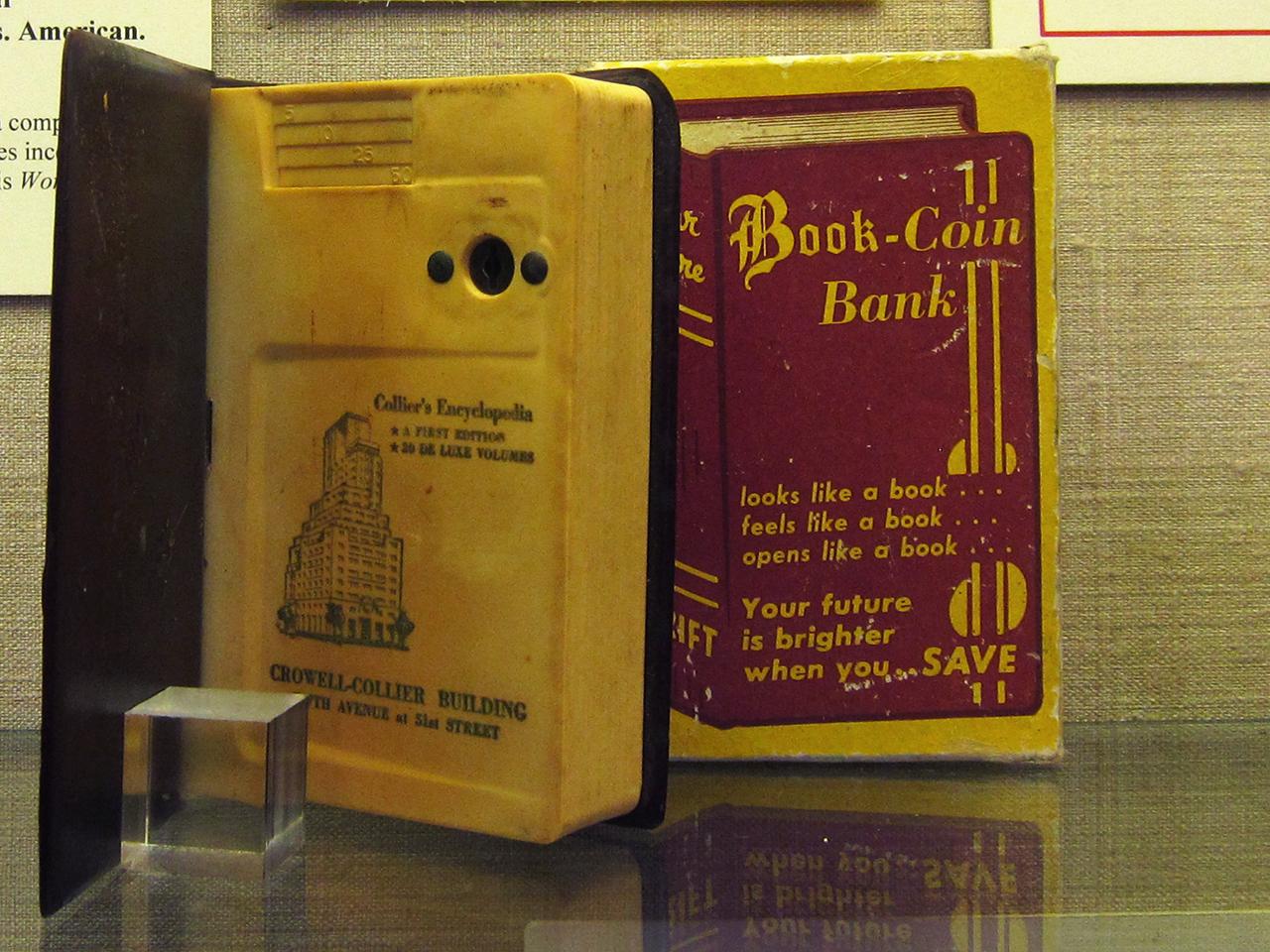
camouflaging on a shelf. Children’s coin banks, for instance, hide behind misleading covers
 that market the vaults as encyclopedias. On view, too, are slender cases meant to hold
recipes in the shape of a seven-volume recipe book — in which one previous owner once
hid a personal letter regarding “her unsuitable conduct and questionable behavior.”
This potential to conceal also led to a number of blooks for impish entertainment: beyond
classic board games (and even educational ones), some blooks were mass-produced as gags.
One 19th-century trick book stashes a snake that emerges open-mouthed from its wooden
lair if you tug a string. The exhibition also features an entire case of “punchline” books
that deliver jokes — at times silly, at times shocking — to viewers upon the opening of
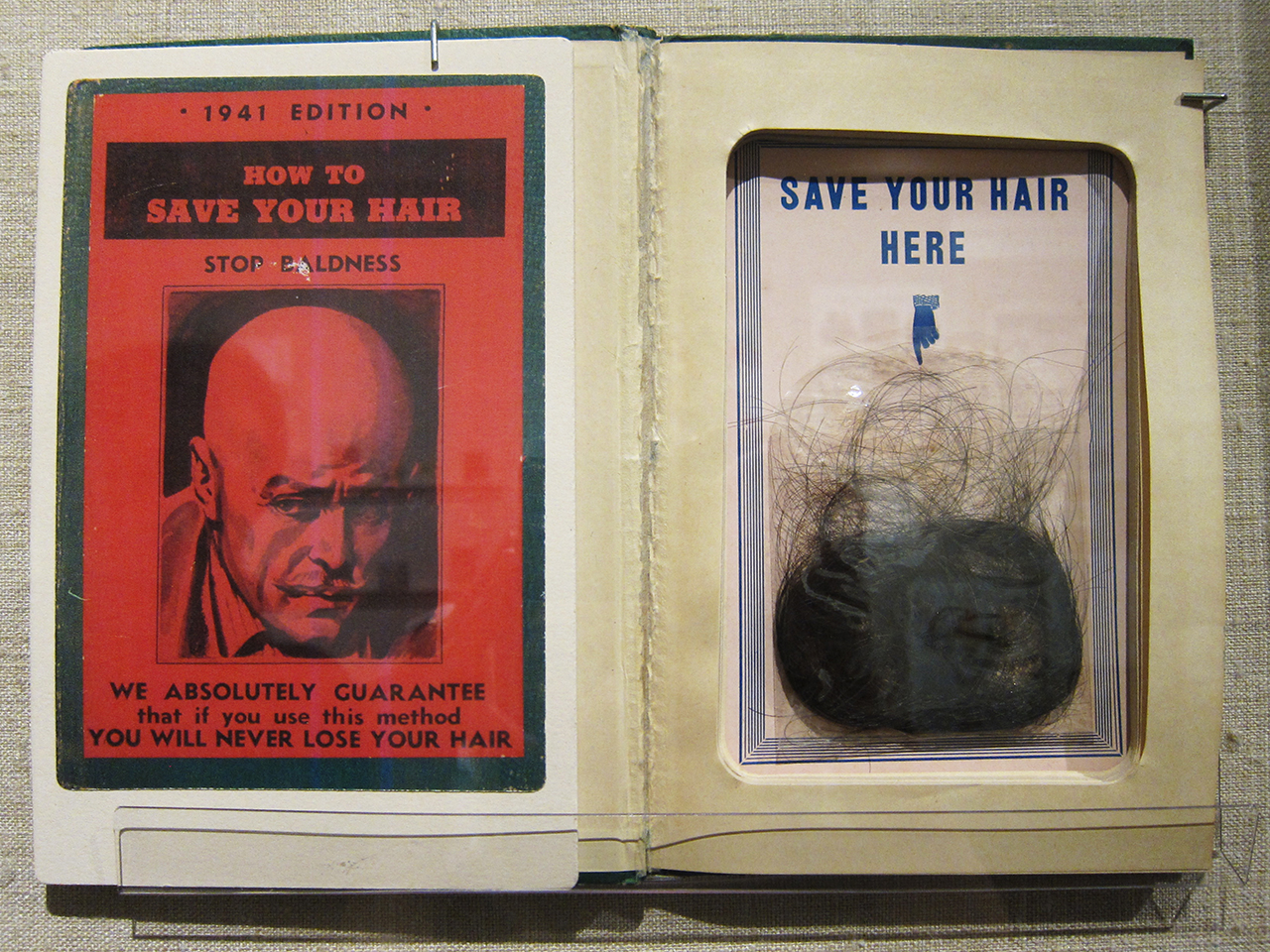
their “pages.” One absurd title, for instance, suggests it will advise on how to save the hair
of those in fear of balding; upon opening it, however, you instead see a compartment for
literally preserving locks.
Other containers adopted the design of a book simply for aesthetic reasons, serving as
practical objects while nodding to what was perhaps their owners’ passion for reading —
or at least a desire to present the illusion of intellect. Someone once organized his or her
office supplies in a large tome, and one woman kept her 14-piece vanity set in a blook
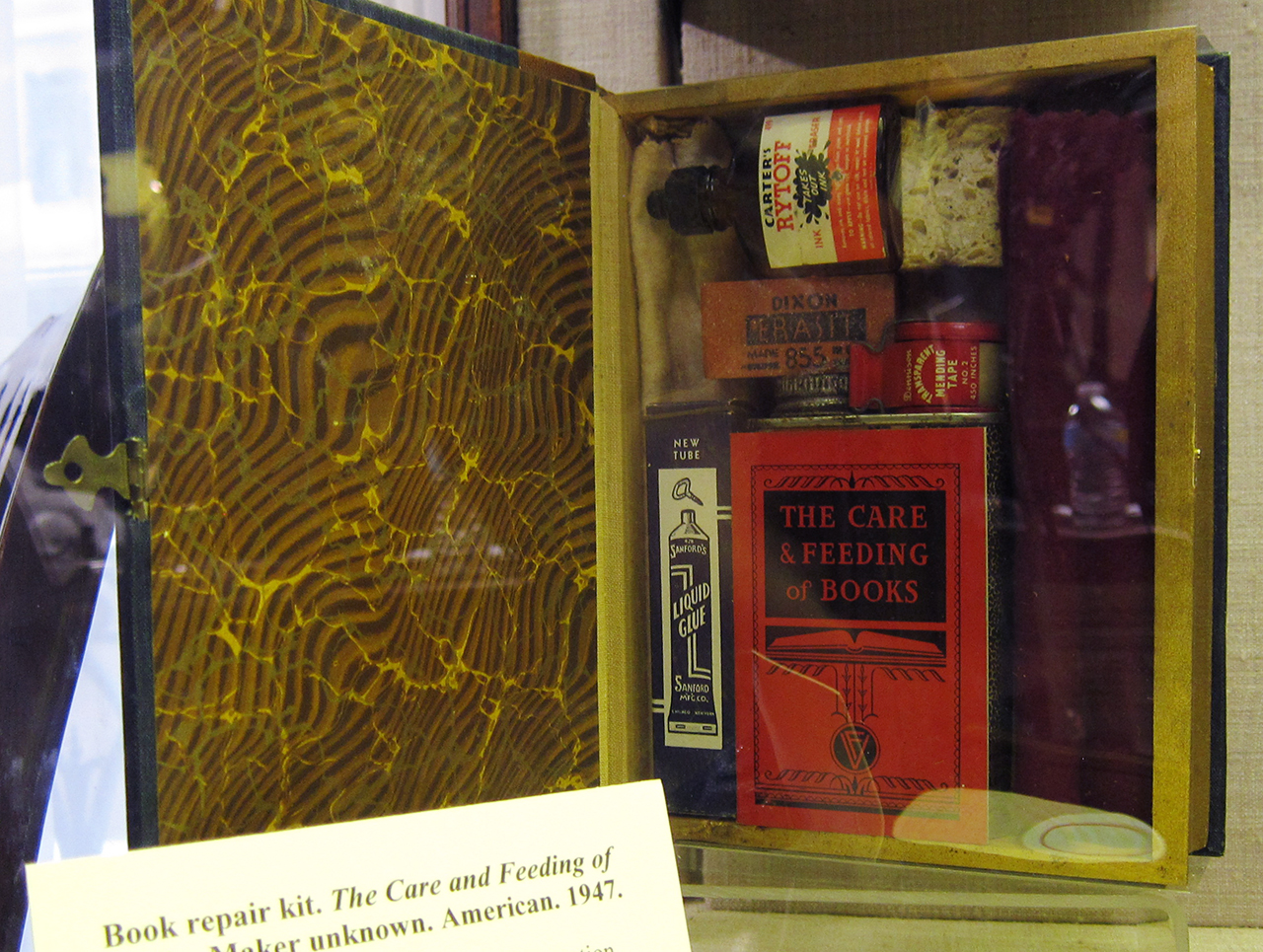
with an elaborate 1920s-style cloth binding. Then there’s the very meta “book repair kit,”
which came complete with an eraser, mending tape, sponge, glue, and its very own book:
an instruction manual to properly proceed with mendings. On the flip side, other blooks,
from ceramic ashtrays to lighters with decorated dust jackets, focused only on the
superficial look of a book and do not open at all.
Many of these objects are admittedly slightly kitschy, but the unexpected shedding of pages
 — what makes books symbols of knowledge — to simply having the image of a book
around you is what makes blooks particularly endearing. Still, some blooks offer more
than just their unique physical presence and do hold sentimental value for their owners.
One cabinet in the exhibition features a number of wooden love tokens and small,
palm-sized memorials carved with tender texts to loved ones, all created in the shape
of books. Although unassuming and easy to glance over compared to larger, impressive
volumes, they have the same power of the tomes they emulate, serving to transport the
mind and heart in deeply meaningful ways.

Trick snake book (mid-to-late-19th c.)


Trick snake book (mid-to-late-19th c.) (click to enlarge)

A stamp holder
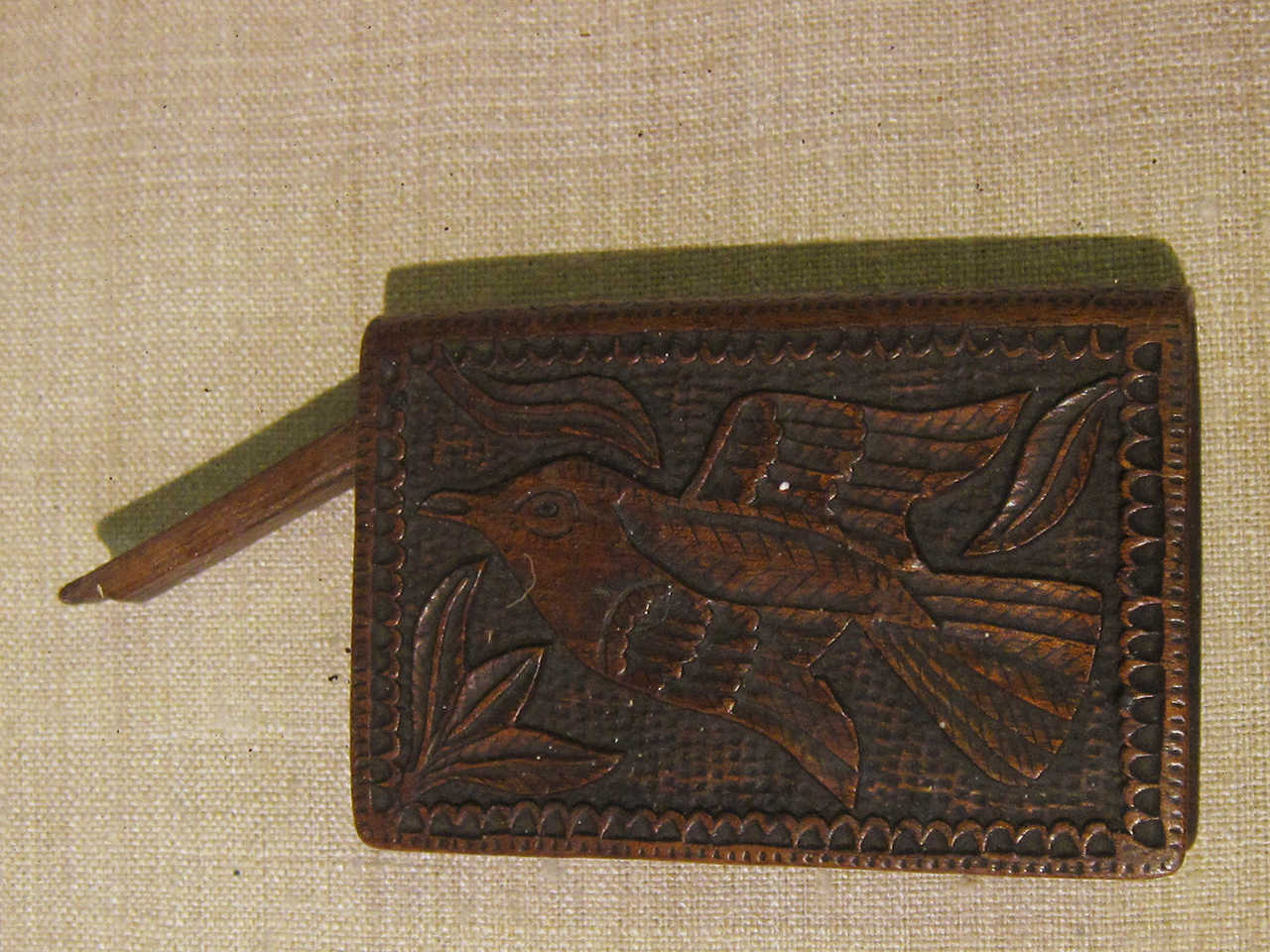
A hand-carved wooden cigarette case (1914-1917)
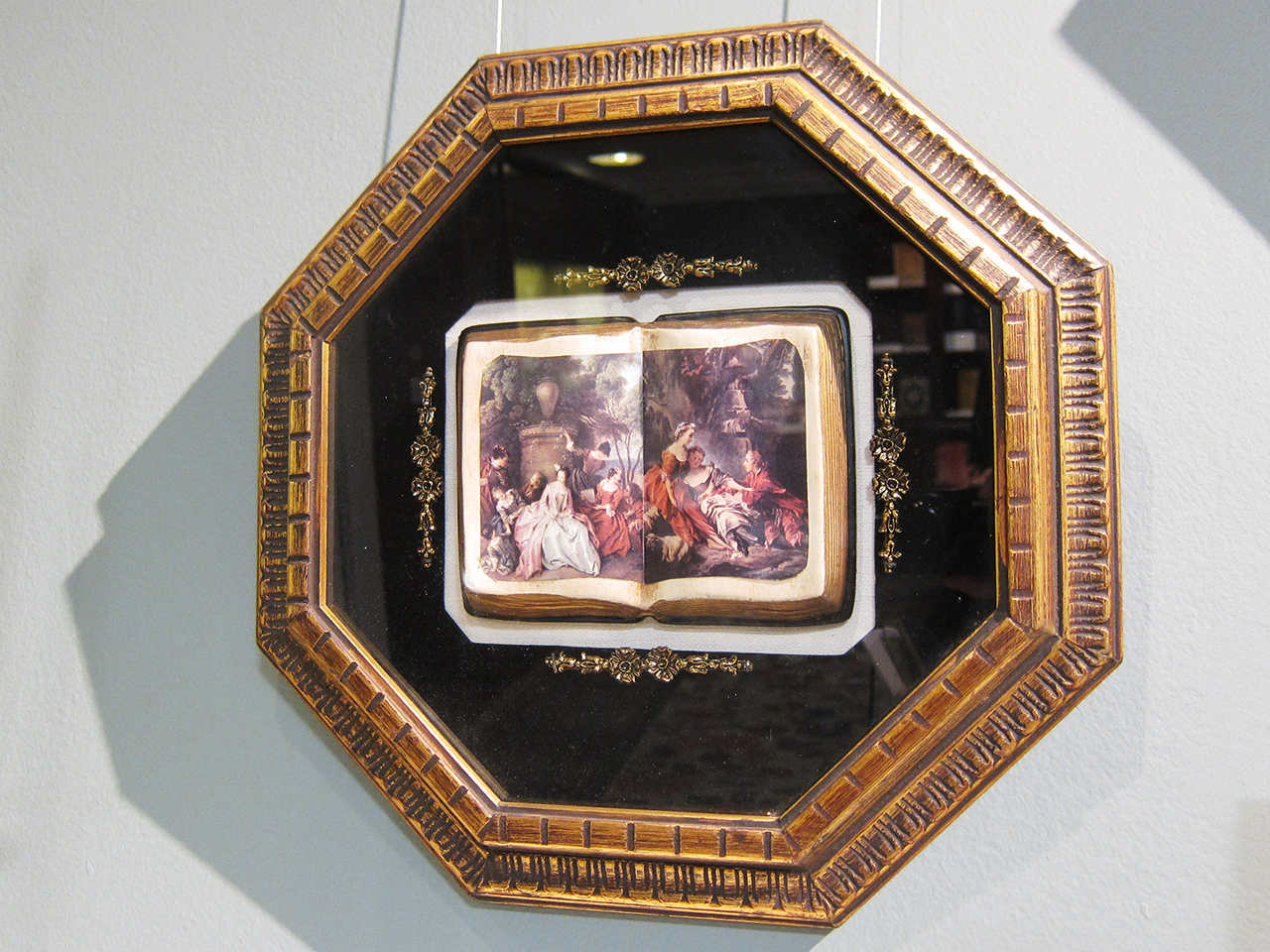
A framed faux box with three-dimensional open books showing decoupage images of famosu European paintings (mid-20th c.)
A framed faux box with three-dimensional open books showing decoupage images of famous European paintings (mid-20th c.)
Crowell, Collier and McMillan, "Your Future" (1950s-60s), a child's book-coin bank
Crowell, Collier and McMillan, “Your Future” (1950s-60s), a child’s book-coin bank
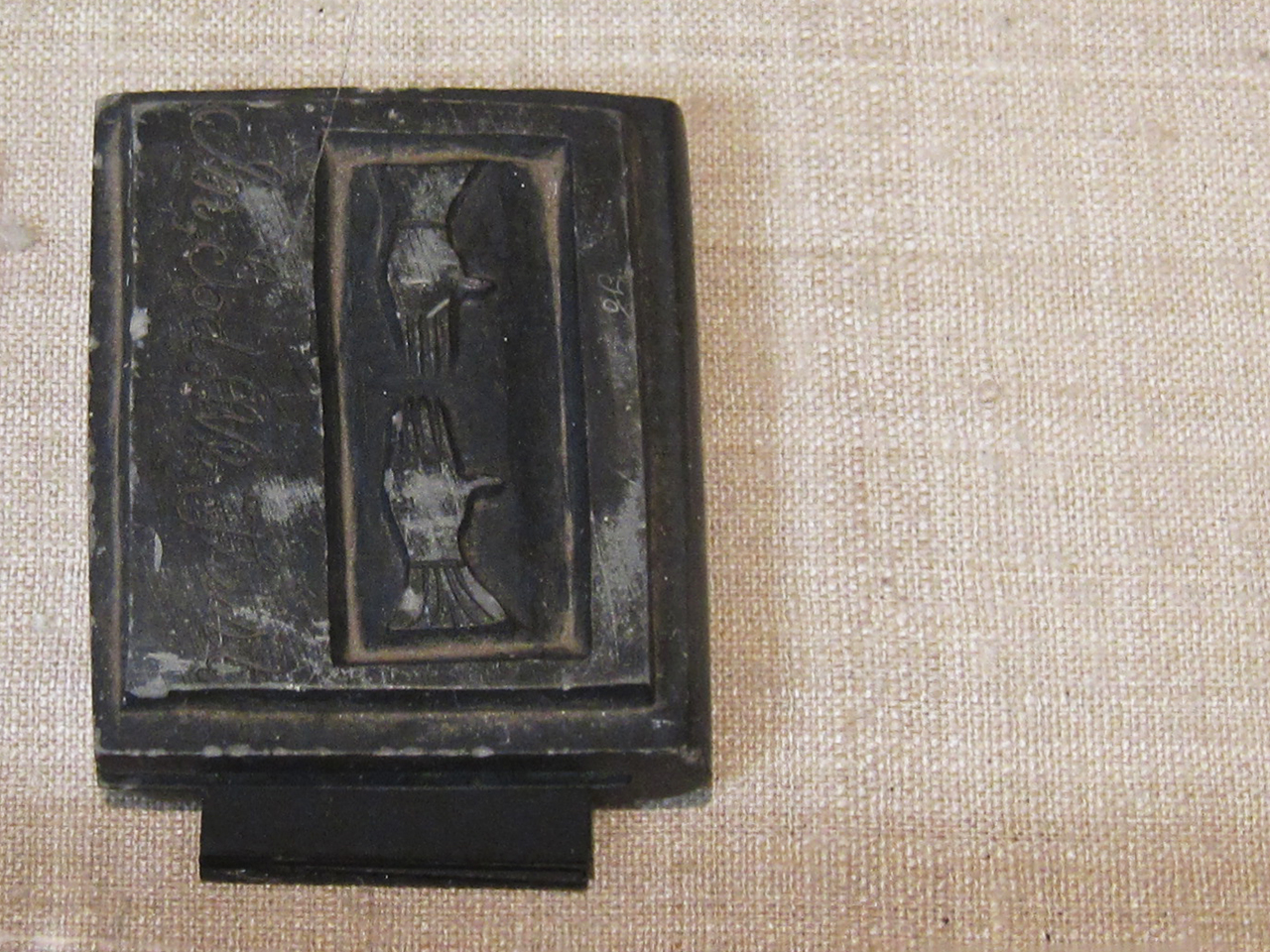
Hand-carved slate memorial book, inscribed with "In Memory" on the spine and "In, God. We, Trust" on the cover
Hand-carved slate memorial book, inscribed with “In Memory” on the spine and “In, God. We, Trust” on the cover
Philip V. Spinner & Company, "Smoke and Ashes [by] Flame" (1927), a smoking set
Philip V. Spinner & Company, “Smoke and Ashes [by] Flame” (1927), a smoking set
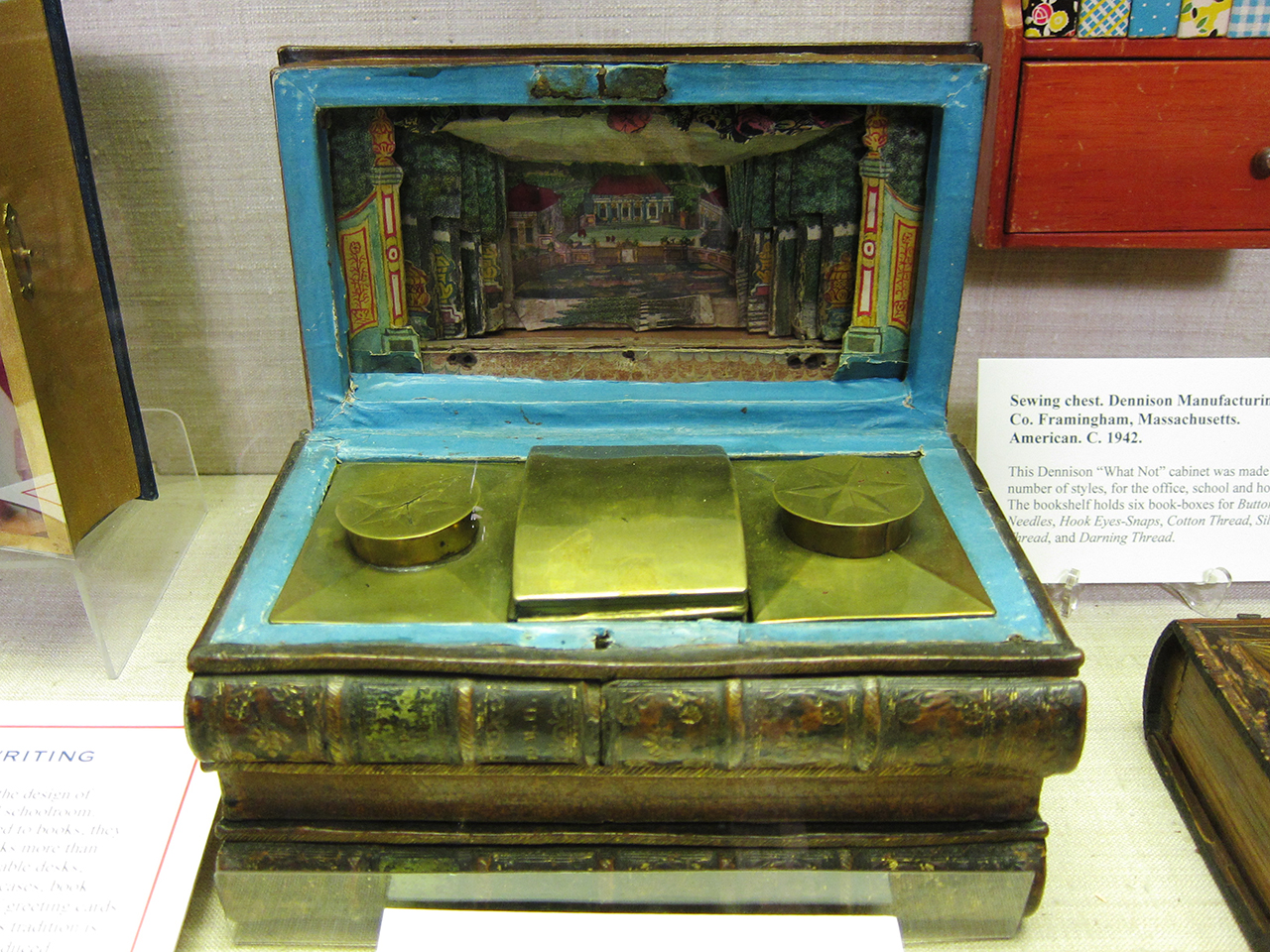
Writing or tea box with a paper theater (late 18th to mid-19th c.)
"How to Save Your Hair" (1941 edition of mid-19th c. publication)
“How to Save Your Hair” (1941 edition of mid-19th c. publication)
Reversible Collar Company, "Album Collar", a collar box for a new and improved cotton and paper collar (1870s)
Reversible Collar Company, “Album Collar”, a collar box for a new and improved cotton and paper collar (1870s)
A carved maple sugar mold in the shape of a bible, likely meant for a communal holiday meal or funeral (c. 1820s)
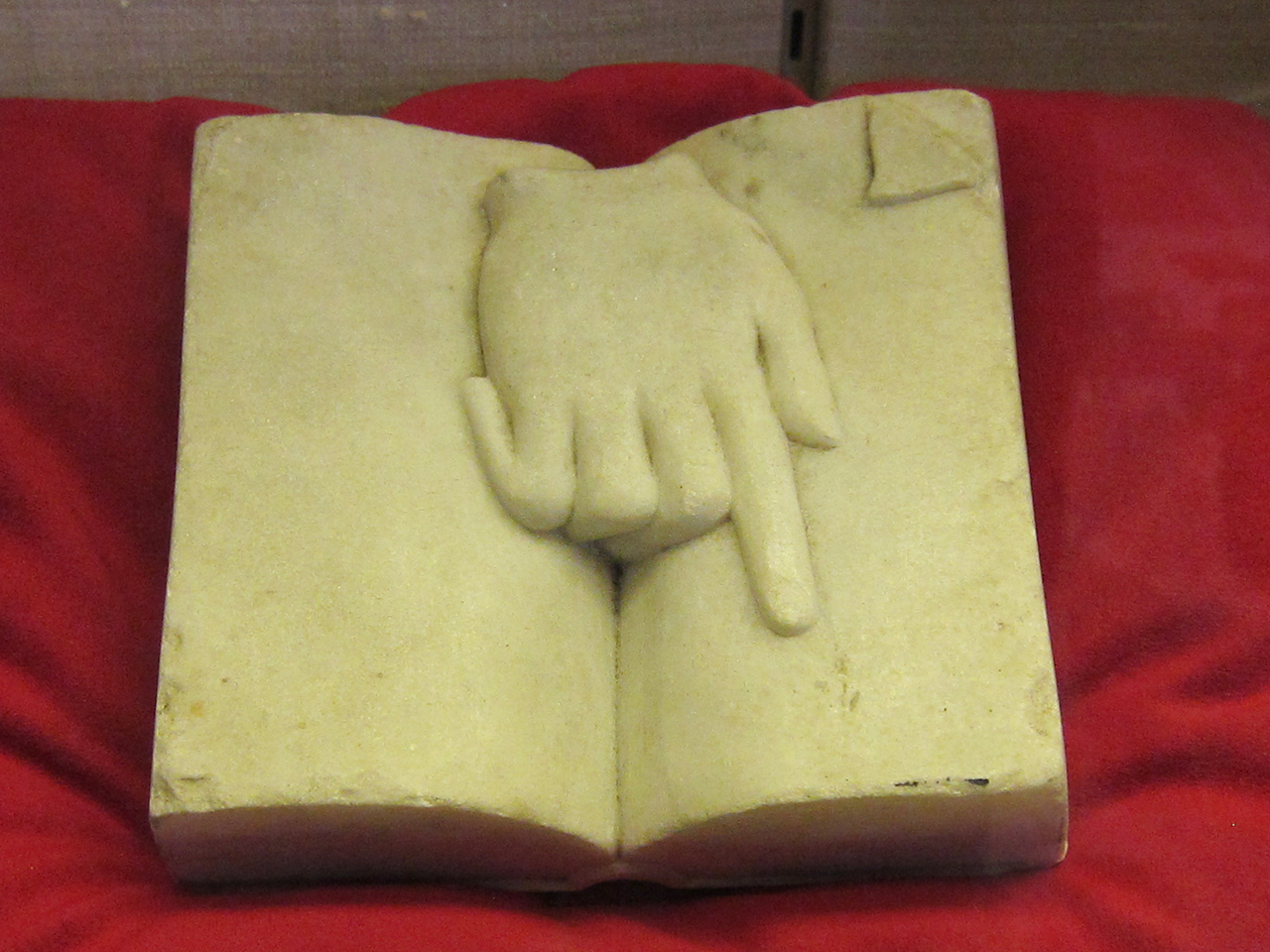
Marble memorial box (19th c.)
"The Care and Feeding of Books" (1947), a book repair kit
“The Care and Feeding of Books” (1947), a book repair kit
Blooks: The Art of Books That Aren’t continues at the Grolier Club (47 East 60th Street, Manhattan) 
through March 12.

The last public tour of the show will be next Thursday, 1-2. 
You can purchase a catalog via this blog, 
or contact me at mindelldubansky@gmail.com.

THANK you Hyperalleric and Claire Voon for this 
wonderful review. Here's a link to the original:
http://hyperallergic.com/279766/the-aesthetic-allure-of-books-without-pages/

Wednesday, March 11, 2015

Honoring Patrice Warin, Trench Art, Book Object Advisor

Patrice Warin  has been a long-time advisor to me on the subject of Trench Art book objects and I'd like to honor him in this post. Patrice is an historian of Trench Art and has written several books on the subject, including one on writing- and another on tobacco-related objects. Since there are many book-shaped tobacco-related lighters and boxes, I've always written to Patrice for his opinion and he has helped to educate me about their manufacture, authenticity and use. 

The term ‘trench art’ describes the decorative and practical objects made by soldiers, civilians and prisoners of war, during wartime. Beyond their significance as military ephemera, the objects testify to the skill and determination of humans under the extreme pressure of war and their need to create objects that reflect their feelings of spirituality, grief, love and friendship. During World War I, book-shaped smoking paraphernalia was made in great variety. The 'bullet lighter', for example, was a common book object made from dicarded shell casings and driving bands. The lighters were easily made and their compact, flat format, fit nicely in pockets. Lighters were necessary, as matches could not be used in trenches because of humidity, and having a light could be a question of life and death. The images below are example of the Trench Art book objects that Patrice has sent me over the years.

This lighter is an example of a French 'bullet' lighter: 


This is a match safe:
This looks to be a match box cover with a very nice Grolieresque binding design; but Patrice may correct me if I'm wrong:

This is a wooden box like a book made by a French soldier (FS monogram on back cover), to protect his letters or snapshots. The title is Guerre (War) 1914-1915-1916 and on the spine TOME 1 (volume 1): 


Thank you Patrice for your generous advice! You can find Patrice Warin's books on Trench Art on Amazon.com http://www.amazon.com/objets-decriture-grande-guerre/dp/2846731497/ref=asap_bc?ie=UTF8

Tuesday, July 29, 2014

Guest Post: Spruce Boxes from Bruce and Lynn Heckman

Bruce and Lynn Heckman

This past Sunday, I had the pleasure of visiting Bruce and Lynn Heckman to see their remarkable collection of over 1,000 unique, folk art book objects. This is certainly the largest collection of its kind, certainly larger than mine which is only a little over 500. I was expecting to see a substantial collection of unique objects, but I was amazed by the breath and beauty of the collection, the extended show-and-tell viewing and the enthusiastic reception that Lynn and Bruce gave me. I’m not sure I have yet digested what I have seen, but I don’t think I will ever forget the wonderful, inspiring day I had with them. I think I'll make another post later to show a few of the blooks I took photos of that particularly interested me.


One of many shelves of book-boxes in the Heckman's collection
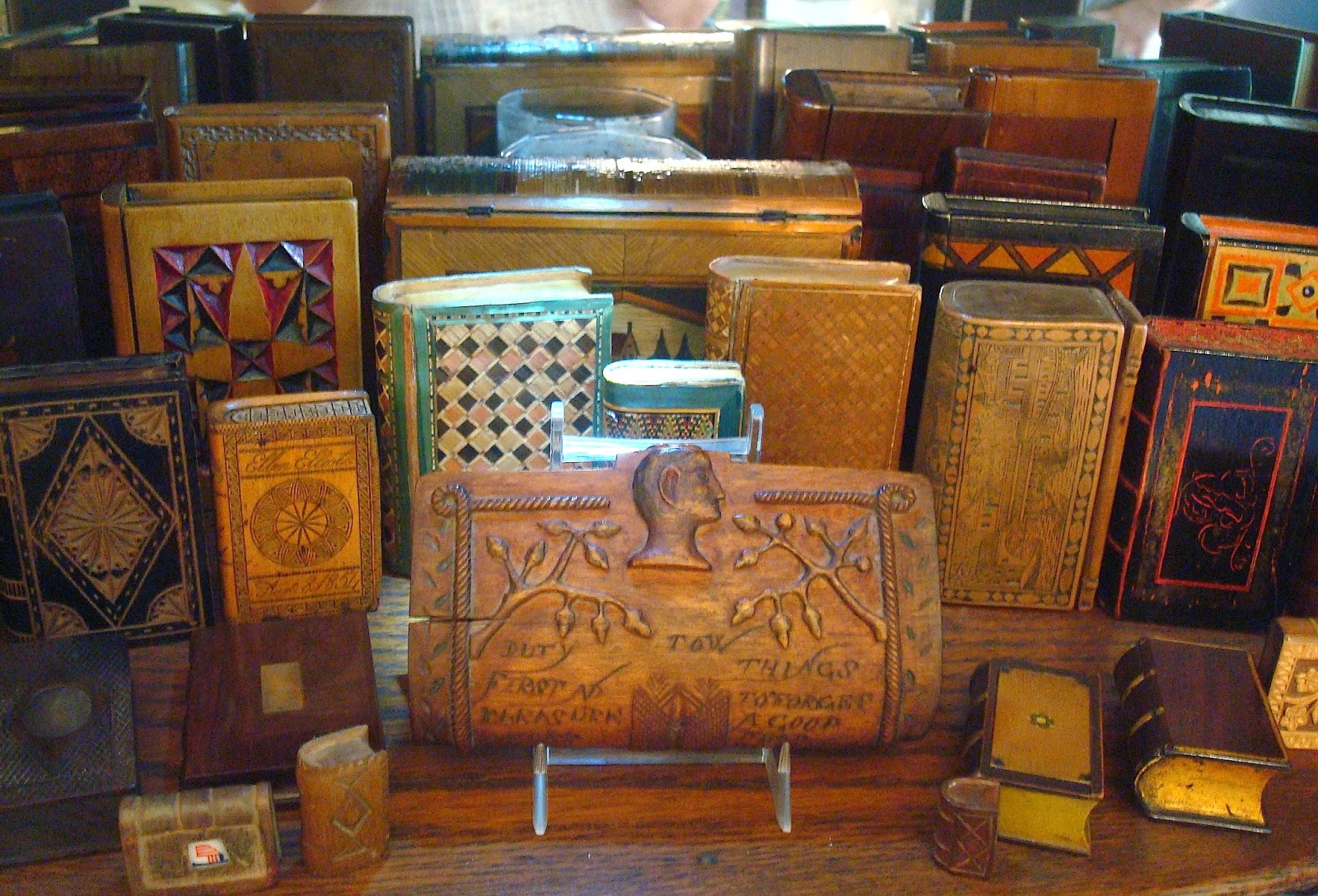
Lynn and Bruce collect as a team and the joy they share in collecting is reflected in the picture of them holding a large book box. They collect many types of book objects, but the largest single category, from a media perspective, is that of  carved wooden boxes with various functions, made during the 18th through 20th centuries. Sewing boxes, puzzle boxes, snake boxes, love-gift boxes, solid carved books, Civil War lancet boxes, banks and safes were all represented; however, the most prominent group within the wooden boxes were the charming American and Canadian spruce gum boxes. Bruce and Lynn provided this post for us so that we can learn more about the history of the spruce gum book box:

Spruce Gum Boxes in the Form of Books
by Bruce and Lynn Heckman


Spruce gum boxes are manifestations of the same impulses that drive the creation of much Folk Art:  Love, moral fervor, whimsy, loneliness due to isolation, and an excessive availability of time. The chewing of gum has been going on for 5000 years, since Neolithic times.  Spruce gum was excreted by trees in the North Woods of Canada and the U.S. and harvested by lumbermen to put in boxes to bring home to loved ones for their chewing  enjoyment. Carving of the boxes spans the 1870's to the 1920's, though some modern examples exist. Modern boxes have a lack of patina that cries out to you after you've handled enough boxes.  We think that some boxes with patriotic were produced for the American Centennial of 1876.


Books were the models for almost all spruce gum boxes, though many were made in the form of a barrel. Bookishness is not normally associated with the lumbermen of the North Woods, but the book icon was widely adapted.  The book-shaped boxes appeal from the tactile, visual, and historical points of view.  Most fit nicely in the hand and were about five inches tall, although some are as small as two and one-half inches and as tall as thirteen inches. Carving varies from the simple to the very intricate. Paint and stains are used, as well as photographs, applied hearts, mirrors, found objects, and colored beeswax. Some boxes have the names of people and places, dates, and sentimental expressions.


Time was abundant in the North Woods and, after a day of felling trees, the nights were occupied with box carving.  The design was made, the piece of wood hollowed out from both ends, and slides were made for the top and bottom.  The decoration was carved and applied and the boxes sealed with shellac.  The heart was the most common decoration and signifies that these objects were created for loved ones at home.  Extensive chip carving was used.  Anchors, ropes, stars, crosses, tree of life, and geometric shapes were incised or applied.


We have been collecting spruce gum boxes since July 1989. Since then, our collection has grown to approximately one hundred boxes. These are part of a much larger collection of 'blooks' spanning three centuries and many countries. The spruce gum boxes appeal to us for their artistic, sentimental, and historical aspects.  We have enjoyed the collecting hunt and sharing our collection with interested collectors.


_______

Record Image
Maine State Museum Collection
If readers would like to see and learn more about spruce boxes, the Maine State Museum has very good images and descriptions of the boxes on their online website.

Click here to read an article about spruce gum from Northern Woodlands Magazine.  

Ian Berke recently sent this picture of three source gum boxes he recently saw at the
Maine State Museum.


Monday, June 16, 2014

Beyond the Elephant Folio - History of the United States

Wrote the book on: know everything there is to know about; 
be the expert on (chiefly North American)

The United States Rubber Company was founded in Naugatuck, Ct. in 1892. In the 1920s, United States Tires apparently published a substantial history blook with descriptions of Amercian towns. They are quite respectful of the codex format and the billboard book has the weight and authority of a heavy reference book. The undulating pages, realistic spine flexibility, endbands and squares all show the maker's understanding of how books are made. While the binding is solid, the imagery is a little confusing to my modern eyes. What's that feather pen and ink well doing there? I suppose it's intended to be a freshly made manuscript. 

So far, Rhinebeck, New York, Norwalk, Ohio, Oldsmar, Florida and Fresno, California are the cities or towns I have seen with billboards. I am hoping to find a press release or published explanation of this ad campaign. I'd like to know who designed them, how many were made, for what cities, the dates they were in use and the specific design intentions. 

I love this billboard and usually use it as the first slide in my blook lecture. It reminds me of the cartoons I watched as a child in which the books opened at night and all of the characters jumped out to play. It's satisfying to see such a large open book, it represents how I often feel when I'm reading a good book - totally enveloped.

(Note: the Miami billboard below is an update on this post, I'm still finding more.)

Miami, 1925. W. A. Fishbaugh, Photographer. State Archives of Florida, Florida Memory, http://floridamemory.com/items/show/29045


Rhinebeck, NY


Norwalk, Ohio


Oldsmar, Florida

Fresno, California


Wawona, California


Billboard on Ventura Boulevard telling drivers that they are now entering Calabasas, August 1917. The billboard was sponsored by U.S. Royal Cord Tires. Leonis Adobe Museum and Plummer House. San Fernando Valley History Digital Library.

Wednesday, June 11, 2014

Things that look like books

The bookcase shows a diversity of faux books
 in my collection.


This is a blog about the book as object. (See an introduction on the Overview page.) After researching book objects for over 20 years I feel that I can now introduce the scope of this broad and timely subject. But where to start? Please feel free to let me know if you are interested in any particular genre of book objects and I will respond with a post.

When one mentions book-objects to people they usually are reminded of the ubiquitous book safes and coin banks and are completely unaware of the myriad of historic and contemporary objects made in book form. The  bookcase in this photograph contains 19th and 20th century jewelry boxes, card games, office supply sets, sewing kits, book flasks, coal and stone books, book safes, and gags. Let me show you some of them...


This is a small snake book that fits in the palm of your hand. It's a gag.
Snake books and boxes have been popular in many countries since at least the mid 19th century.

When the unsuspecting victim opens the book, they are much surprised
by the scary snake. 19th century versions were made in a slightly different
format. They often had sharp metal tongues which bit the victim when they
opened the book.

 
This is a slate memorial book, front cover with an image of hands reaching
out to each other between heaven and earth and the caption "In God We Trust".

The back cover of the slate book is carved with
symbols of faith, hope and love.

This blook of Milton's Poems contains a book-shaped surprise... to be continued!